Showing posts with label Freebie. Show all posts

13 May, 2014

Telling Tuesday - Feedback for the regular teacher

Today's post will be short and sweet as I share a resource I've created and a few little reflections about it.

Ever since beginning my research on quality casual teaching, I have been reading about the necessity of leaving written feedback for the regular classroom teacher to keep them informed. Last week was my first week of teaching, so I used a few thank you cards I had lying around as they seemed suitable for the occasion. Now I am through the first week, I am rethinking my approach for the long-term. Some have said that it is best to use typed notes if possible, but I have found my ICT resources somewhat limited going into schools. However, I have seen one template that impressed me. A simple printed format that allowed space for neat, hand-written notes. While I am accepting of the desire to make such forms 'pretty' or 'cute', I can't say I really saw the relevance of the cow and barn pictures though. Perhaps I would understand if it had been in a country school or after taking an excursion to a farm, but this was not the case. So, upon reflecting on a few templates, I have set out to create my own. I had to include the 'handy helpers' box, as I love providing opportunities for the 'difficult' students to prove themselves and surprise the teacher.

After some more templates? They aren't quite as easy to find as I thought when searching, though I've come across them before. Here are a few:

What do you feel is essential information to provide in a feedback form? Does cuteness factor matter for you?

12 May, 2014

Marketing Monday - Job searching the right way and a template

Quick apology for the lack of a post last week. I am officially working now and was called in a few times, so it's been a tad busy around here. So here is the belated post that had been intended for last Monday!

Last weekend, I was researching marketing tips and tricks, preparing for that time when my book is finally complete (and this weekend I began my official author facebook page!). When reading about USPs (unique selling propositions or points), something finally clicked. When we are job searching, we should be branding and marketing ourselves just like a company or product, so some of these basic marketing principals should be applied! Sure enough, I googled USPs and found that job seekers were encouraged to use them. So how have I applied this new knowledge?

Firstly, let me explain the idea of a USP. Basically, it describes what is unique and worthwhile about a product, brand or person. It answers the question: why should I pick you rather than one of the other candidates? During my Uni course, we had discussed interviews and the process for applying for jobs. We had talked about dressing professionally, giving a good first impression, presenting a strong resume and answering questions as well as we could. However, we all received this training, so what sets one of us apart from the others if we all applied this? A USP helps us stand out among our peers in order to gain the attention and hopefully the position! And this does not involve brightly coloured paper!

As I began to reflect on this, I wondered what my personal USPs were and how I could present them. All my research seemed to define the 'what' and 'why' of USPs, but didn't make the 'how' too easy for me. If this is crossing your mind, I will be honest with you: being unique and finding what is unique about you is not easy, but it can be done and is worthwhile. Let me share how I worked this out for myself.

I began with my flag page, a passion test which I have discussed in a previous post. I chose to only use my top five motivations. I believe that these introduce me in a unique way, set me apart from my peers, and give insight into what kind of teacher I am. I have seen many resumes begin with a statement of belief, and many of them end up looking the same, but my motivations are unique to me and will not be found on every second resume.

I then listed a few of my unique strengths, experiences, beliefs and even a few quotes that people have said about both myself and my teaching. Basically, it is the details that make each of us unique. We can all say, "I believe that engaging students is important, so I do A, B, and C." However, our A, B, C may be very different. Then again, finding a different way to present this may draw just a little more attention. For example, "it is a habit of my students to request homework." This is strong, personal and slightly more unique evidence.

Similarly, reading through statements of belief, you will find many will look very similar, especially if those writing the resumes have the same training. For example, if I had stayed in Tasmania and worked in early childhood, I would have been submitting my resumes with others who had gone through the same course, and many of us would have been singing the praises of learning through play and a variety of experiences. In order to avoid this, my belief statement is incredibly short and specific. I have limited myself to one statement on why I believe casual teaching is important. As a casual teacher, this is relevant and displays the commitment I have to the job. It also provides some insight into how I approach my short teaching blocks, but it doesn't leave the person at the other end wading through the masses of paper to get there. Their time is important and they won't waste it searching through something that looks the same as everyone else's!

If you have just read through all this and you're still feeling clueless as to what your USP is. Stop. Here is another question which may help: What do people say about you? Often, if people compliment you or your work, it is because it is commendable and not seen in everyone, especially if this comes from a colleague. During my final practical, my colleague teacher commented on things I was tempted to shrug off. She saw this, stopped me, and told me that she was telling me because it was a rare thing to find among even final year students. That means, what she was saying about me was my USP, or at least one of my USPs. Remember what people have said about you in the past, and it is likely that a future employer will find it an attractive trait as well.

As my final reflection on the topic, I wondered how to present this information. By now I had a variety of USPs for different areas. I had already had my interview with the one school that bothers interviewing casuals, so I had missed the opportunity to present it in that form. It didn't seem appropriate to slip into my brief resume (I am told that for relief work, one page is sufficient!). If there is a particularly strong, short USP, it is suitable for a cover letter and should be included to get attention as quickly as possible, but I had too many USPs to put them all on the cover page. Finally, looking through the amazing Relief Teaching Ideas community page on facebook, it clicked. I had never understood the appeal of brochures or what I would include in them, other than the usual resume stuff. However, a brochure is perfect for quickly presenting USPs in an interesting, easy-to-read manner. Slipping it into my job application pack wasn't going to be a problem. Personally, I prefer to keep things professional, rather than colourful and attention-grabbing, even as an early-childhood casual, and designed the brochure to be simple and in line with the style of my resume. If others like to get their creative on and that works for them, awesome. I have also heard of people attaching a photo to the front of their brochure and there have been mixed reactions to this, from the principal who finds it unprofessional, to the one who finds it personal. So I here I have provided a basic format, based on my own brochure, along with guidelines for including specific USPs, but I would love to see how others personalise it to fit their own style and preferences. If we are using this to present USPs, it makes sense that each would look unique!

So without further ado, here is the USP brochure format I used:
External side of brochure
Internal side of brochure


Want to read more about USPs and job searching? Click on the links below:

What is your USP? Was it easy or hard to define? How do you present it to potential employers?


09 April, 2014

Wording Wednesday - Planning a day around reporting skills

How many of your students read the newspaper? My bet is, not too many. I remember often being expected by teachers to be a fan of the news, though I am still not sure why. Is it because it is current, local, informative or what? I will openly confess that I still don't read the news. However, I have always loved those reports on certain shows which are known as 'interest articles.' As a child, I used to fight about bed-time because I had sat through over 45 minutes of news to watch that one report that interested me.

Writing or recording interesting reports to draw in young people is certainly a skill. How many of your students will graduate with it? As I continue to gather and create resources for my relief folder, I plan on sharing them here, hence the second freebie in a row now. Today's little freebie is a rough outline from which to form a plan for a lesson, day or even a couple of days running, all based around article writing. Students can involve a wide range of subjects, engage in topic of interest to them, and create a class news presentation, paper, magazine, blog or YouTube channel (these can be private last I checked). This could be done as individuals, partners, or small groups and could end up being published in some form or link to a social action unit. The options are huge so it can be used across a range of grades and adjusted to fit an appropriate time frame.

So here is at least a day of reporting.

Want some resources to compliment this idea and aid in the more detailed planning? Well I happen to have found some I like:

  • This form for peer reviews from Classroom Teacher Resources.
  • TPT- A Peer Edit Guide to Write Right - While I would not buy this one for the ages I tend to work with, I love the five questions mentioned in the description and can see these being effective on a peer feedback form for opinion and news writing.
  • Online Chart Tool - A free online tool for creating bar charts, line charts, pie charts, scatter plots, bar line graphs and more.
  • ABC - Behind the News - An online news website designed with children in mind to introduce them to news reports.
Do you see yourself using such a theme in the classroom? How? Do you have any handy resources to add to the list?


08 April, 2014

Trial Tuesday - 31 math challenges for students

picture of dice - enough daily mathematics  tasks for a month
Time for a freebie! This is a short post today, but when you see the freebie, I hope you'll excuse me. This one has taken a bit of time. Be warned that I do use the term 'challenges' somewhat loosely as
some are repetitive games and others activities which allow you to incorporate your own challenges. However, most do allow for students to think creatively and problem solve if properly introduced. Why exactly I chose 31, I'm not sure now I think about it, as there is 31 days in a month, but not 31 school days. Whatever the case, these challenges would provide challenges for more than 31 days as it is, as some will be a 'once off' challenge to solve, and others are challenges students can practice and improve at over time or teachers can adapt for a variety of skills. There are some which will be familiar and are widely known, others have been linked to specific websites, and others I have obtained from unknown sources or created myself, so if any of the ideas are unclear or need clarification, please comment and let me know! Now without further ado, here is 31 math challenges.

What maths challenges have you done in the past with your students? Could you add a game or challenge to the list which has been missed? There are many out there which work on specific maths skills which couldn't have fit in this list, so comment away.

18 March, 2014

Terrible Tuesday - Learning through our mistakes and making them acceptable

So this week I discovered something terrible. I had made a mistake. I had confused eligibility to teach with the approval to teach documents, so when I went into schools to make myself officially 'available for work' in NSW, I was told I am not in the system. Oops! With all my research and hours of reading, I had not realised there were two separate forms for two separate reasons and I needed both to get a casual job. Cue the strings as I return to my computer to write the humble email back to the other schools to admit to my mistake and keep them aware that I will be available soon.

A quote from Elementary Matters in an article on failure.
Let's be honest now. Mistakes are embarrassing. Students are fully aware of this when they stutter during a presentation and hear the giggles among their peers. However, taking risks is part of growth and mistakes are a part of learning. As a result of this, we have all come across those students who will not complete work, will not start work, or will constantly be asking for either help or approval. If you have the joy of multiple students with such inclinations, completing tasks can become quite the battle and your attention stretched thin.

Let me introduce my plan for attacking risk-taking, mistake-making fears. To start out the day (with a literacy lesson), I read a Dr Seuss book filled with nonsense words. Don't you love them? In fact, here's a whole list of books with nonsense words in them for your collection. The more dramatic the reading and confusion over the nonsense words the better. Make sure when you are finished (or finished certain pages) that you ask the students what has happened? Point out that despite these ridiculous, meaningless words, they can understand it.

Next, comes the challenge for the day. They are to go and do their writing (whatever that may be for the day, perhaps in a similar topic to the book read), but they are not to ask for help! Describe different strategies they could use to attack unfamiliar words. I am sure my younger students will forever remember me standing across the room saying "sound it out and try" and turning away to another student or task. Of course, there is a time for explicit teaching, but sometimes students learn just as much from problem-solving and taking risks themselves. Remind them they can use dictionaries or other texts in the room and if you have a focus strategy already this is a perfect opportunity!

Before the students think you have totally abandoned them, explain the purpose of the task. They are to write independently, proving their awesome capabilities, and experimenting with new words. At the end of the lesson (yes, warn them of this too), you will look through students work. The most amazing words which are spelled correctly will be announced and demonstrated for the class. The 'mistake' words which are mis-spelled will be re-used, because sometimes mistakes might not be great in one context but are brilliant in another. These words will be combined in a special class story, celebrating the risks they took during writing.

What story? You have no time for writing stories? Well, luckily for you, there is a teacher still awaiting approval in a new state, and she has nothing but time for developing handy resources. Just make sure that when you choose a nonsense word for the character's name that you are consistent and use the same word. I have made the spaces for her name red to make it easier for your. So here you go!


Wanting still more support for encouraging risk-taking in your class?
A quote from Neil Gaiman that is circulating pinterest.
Check out:
Do you have any experience with risk-taking or students who struggle with making mistakes? How about first hand experience with making mistakes and making ammends? Please share in the comments!

11 March, 2014

Timing Tuesday: Activities for those early finishers and how to present them

clock - tasks for early finishers - the challenge capsule
Pinterest addict as I am, I found this idea a while ago - challenge capsules. Heard of them? The idea is that when students finish early, they grab a challenge capsule to keep them busy and quiet enough for the rest of the class to continue working. Depending on your personal pedagogy and professional beliefs, you may choose to include additional activities or a bit of fun. As a relief teacher, I never know what grades I am going to be in from day to day. Considering this, I chose a range of open-ended questions and activities which range from word games to creative writing activities to poster designing. The aim is that these challenges allow for diversity in skill levels and will provide an interesting challenge for all. This freebie will be attached in this post, but first the all important question of how to present these challenges.

Typically, searching for the challenge capsules, you will see a picture similar to this:

This originated from Mrs Gold's Class and works fine. It's practical, quick and simple to put together and use. An idea from Teacher's Pet is to create challenges for different ability levels or grades and colour code them. This enables you to tell them 'grab a blue capsule' and know that they will be choosing an appropriate challenge. You could also do this for different subjects or types of challenges.

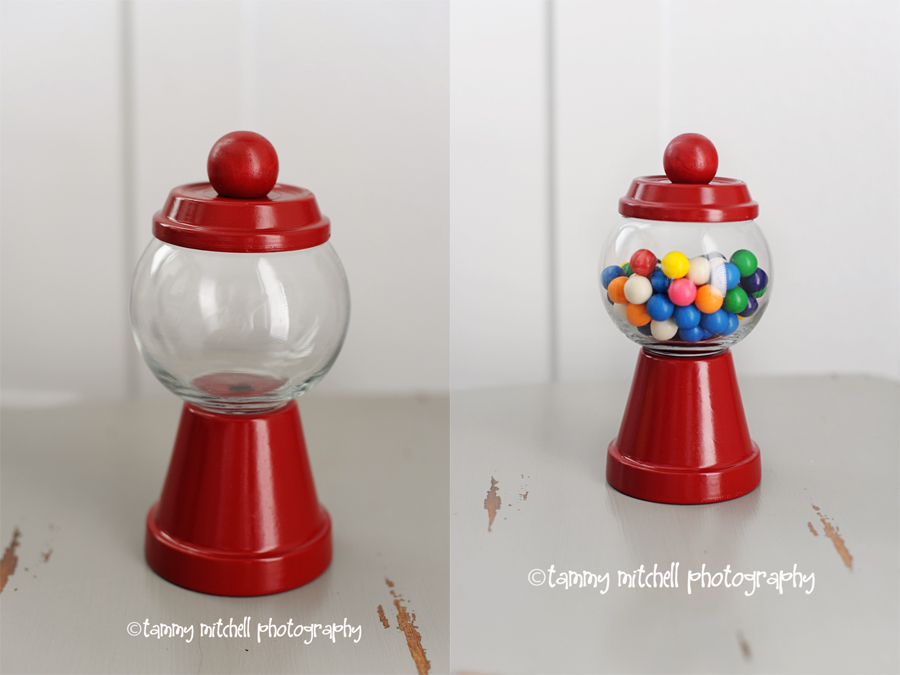
Then I came across a pretty variation (I thought on a blog, though I can't find it now! Lesson learned: always save amazing ideas as soon as they are spotted). Creating a candy dispenser for the capsules. Now I'm not one to say that everything has to be cute, so really throwing the capsules in a bowl would work just as well. However, I love the idea of a candy dispenser as candy can be a common choice of reward (not something I personally practice) and it adds a novelty value to the capsules, associating them with rewards. Here are three examples of D.I.Y. candy dispensers which could be used.

Made using a jar and chicken feeder, the decorative limitations barely exist. You can find the instructions over at U Create.

New take on how to present, store and dispense challenge capsules
Again, this simple container can be decorated endless ways. I have seen spots, cartoon characters and holiday themes. Check out the tutorial at Tammy Mitchell Designs.

Here is a super easy one using three disposable cups! Twisting the top cup opens and closes the opening as well. Well  worth the try, this tutorial can be found at Heidi Swapp.

Enough ideas yet? I think not! Just in case the idea of challenges in capsules in candy dispensers doesn't get your creative wheels turning, try re-thinking the advent calendar. There are creative options everywhere online. In fact there are so many that I dare not try to cover them all, but I'll show you a few I love. Again, you can decorate as you like, whether cutesy or simple AND as advents often include multiple sections, you can easily group or label them according to subject, difficulty level, time required, etc. I've tried to keep the examples small or easily movable due to the constant moving of relief teaching. Click on the pictures for tutorials on the original page.
Sew it or use envelopes.
A Beautiful Mess
Matchbox drawers could fit dice
 and other small resources.
Creative "Try" Als
Shaped stacks of matchboxes.
All About You
Use envelopes as suggested or
write on the back of pretty paper.
Serenity Now
Reinvent or redecorate a
refillable advent calendar.
Rookie Mums
Challenge capsule alternative, numbered paper bag activities
With brown paper bags, you
could even include small group games.
One Perfect Day

And finally, here is the freebie I offered to start with. Three pages of open-ended challenges to start you off. Please note that I did use the puzzles I found here, here and here.

Any more ideas for early finishers? Any creative beings out there have another possible way of presenting activities? Please share!